

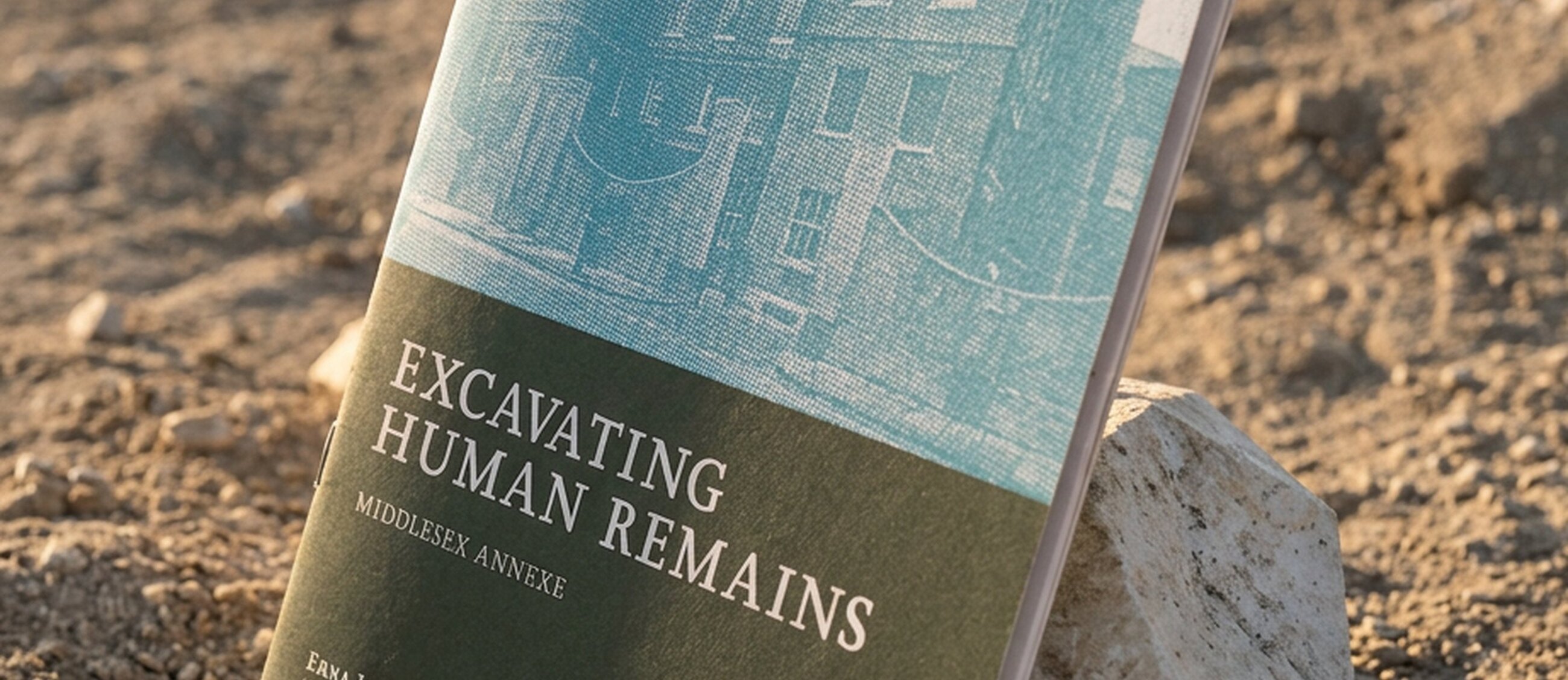
Excavating Human Remains, Middlesex Annexe
A manual for muddy hands.
L-P Archaeology were excavating a workhouse burial ground on Cleveland Street, in use for sixty-three years, where parishioners and inmates were buried together. Every skeleton had to be identified, drawn, photographed, lifted and crated to the same standard, by teams working in the open. What they needed was that standard in fifty-two pages, out in the trench with them.
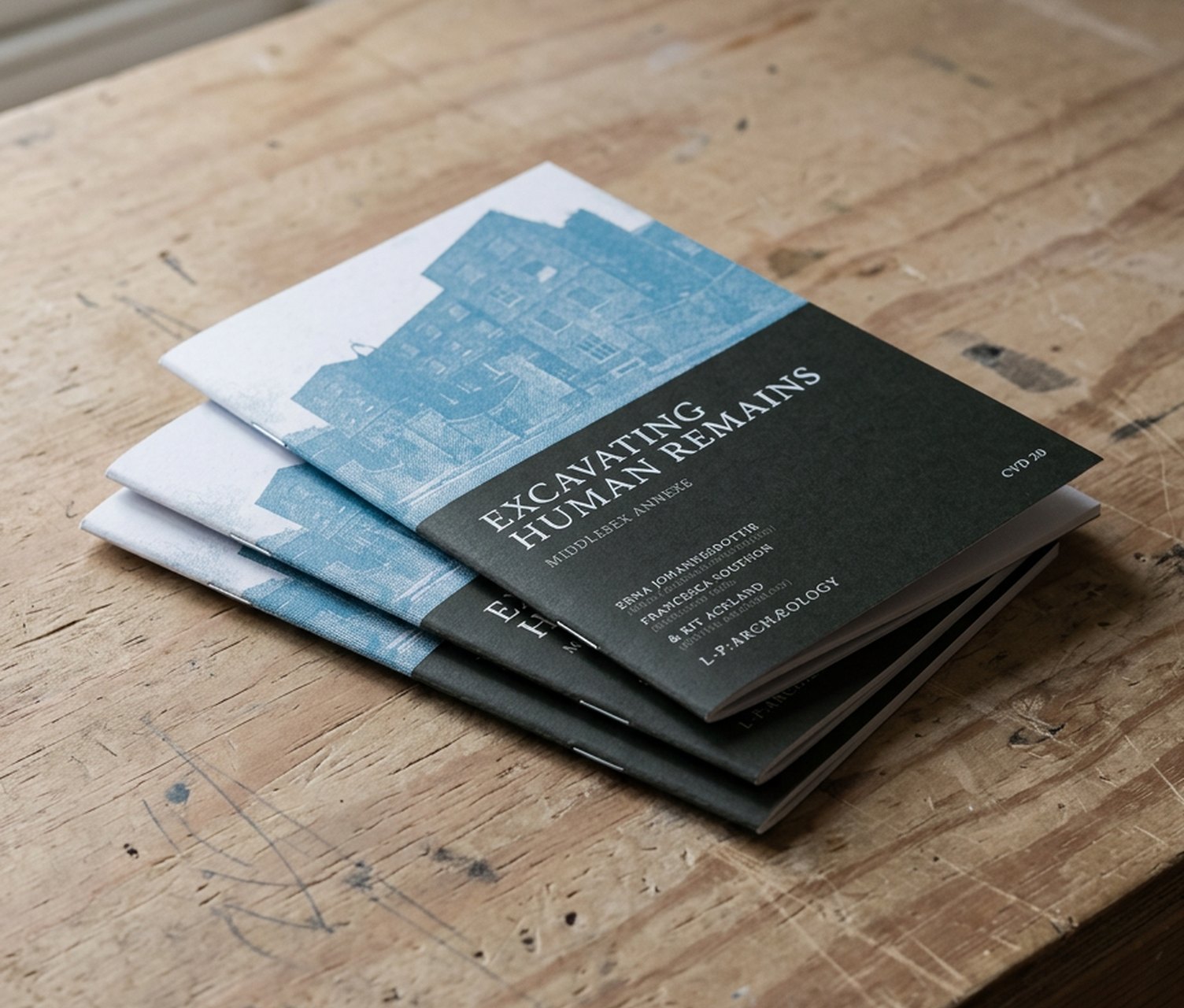
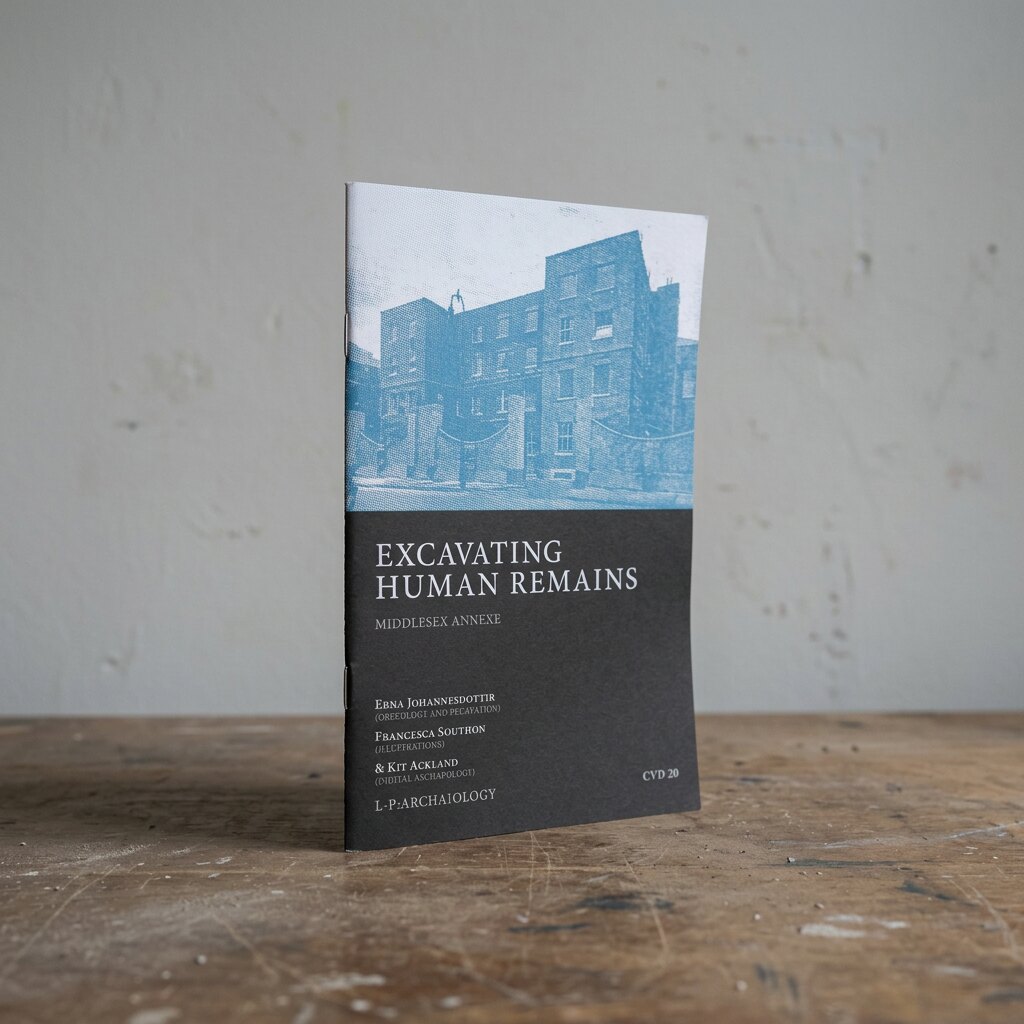
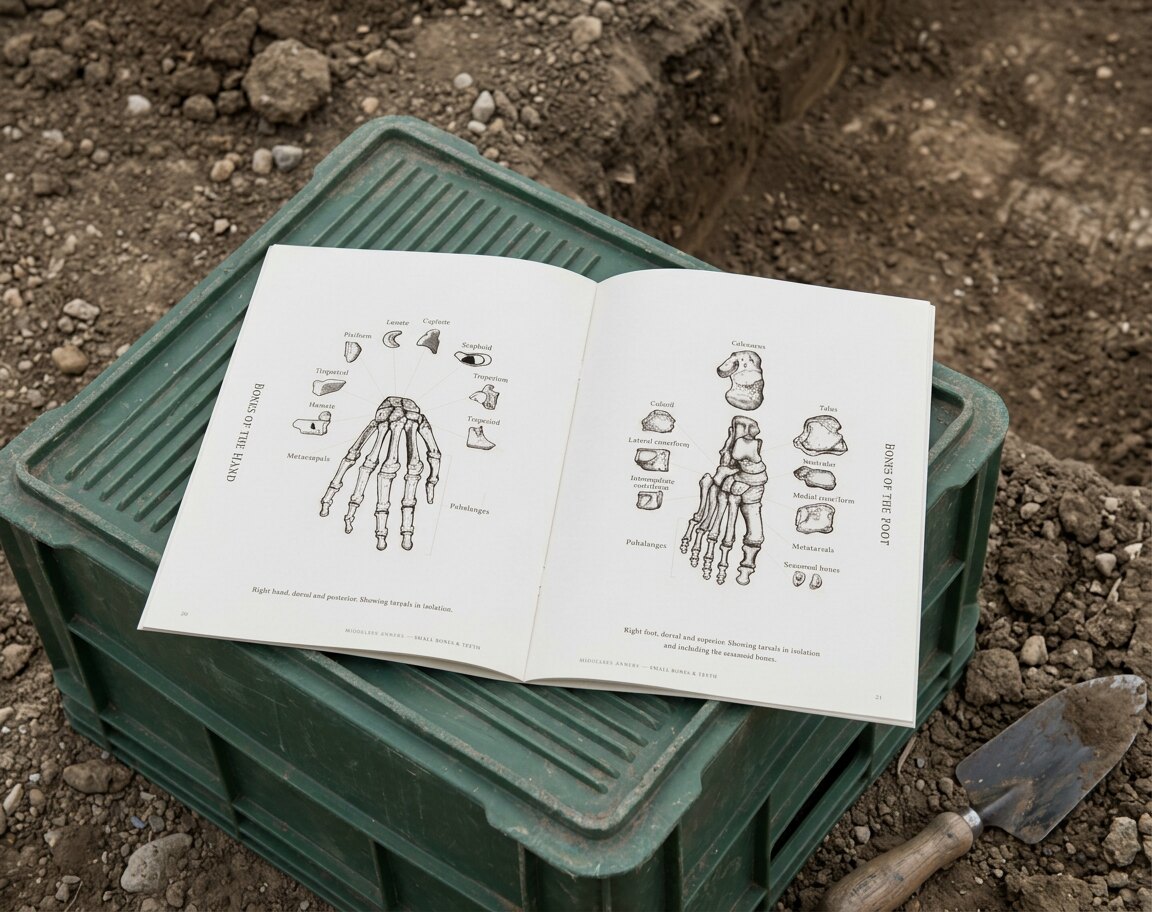
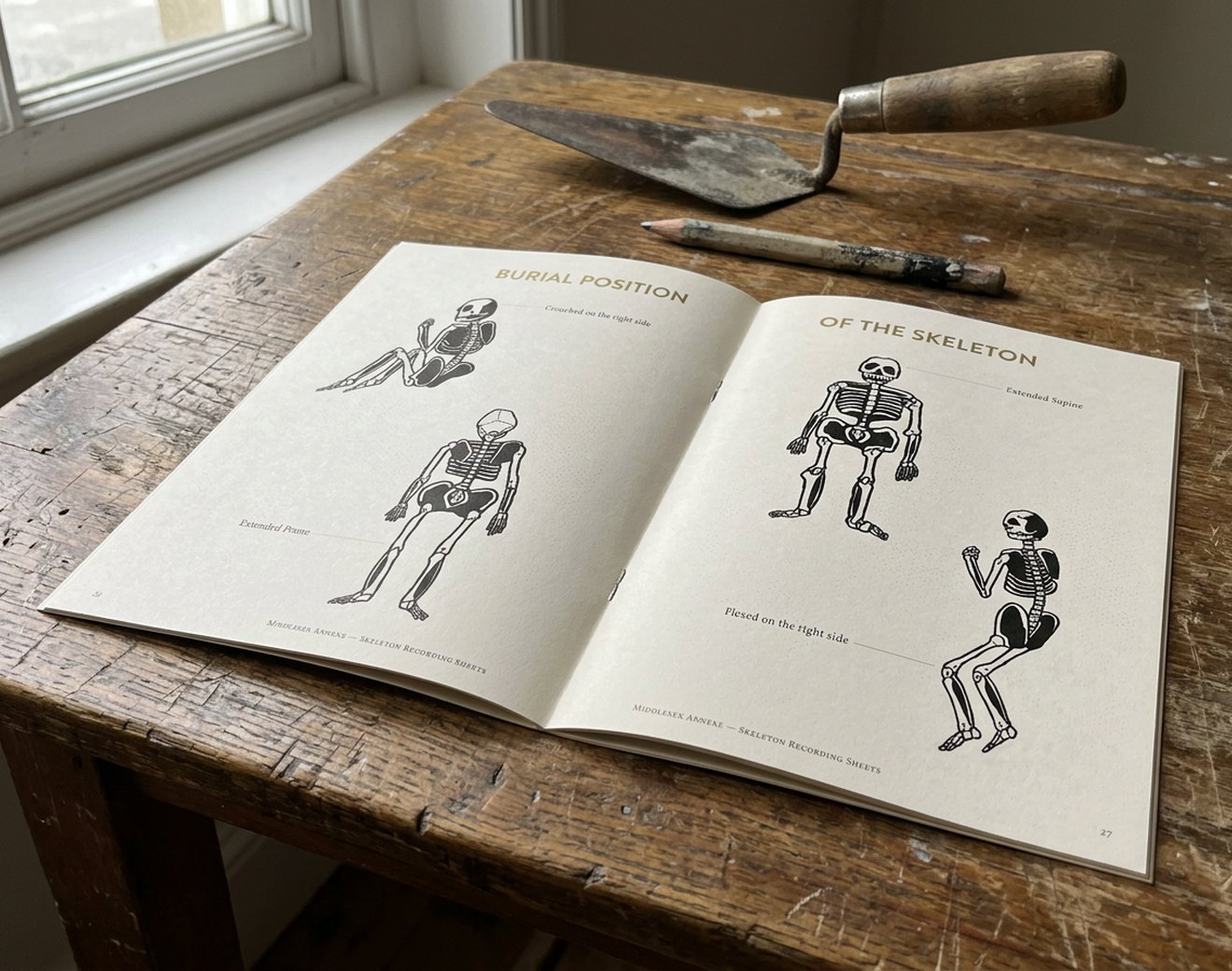
Instructions read standing in a trench.
Every page had to work at arm’s length, on site, held in one hand. The procedures run in the order the work happens, from identifying a grave cut to labelling a crate, each given as many spreads as it needs. A running head and folio on every page, so you can find your place even with gloves on.
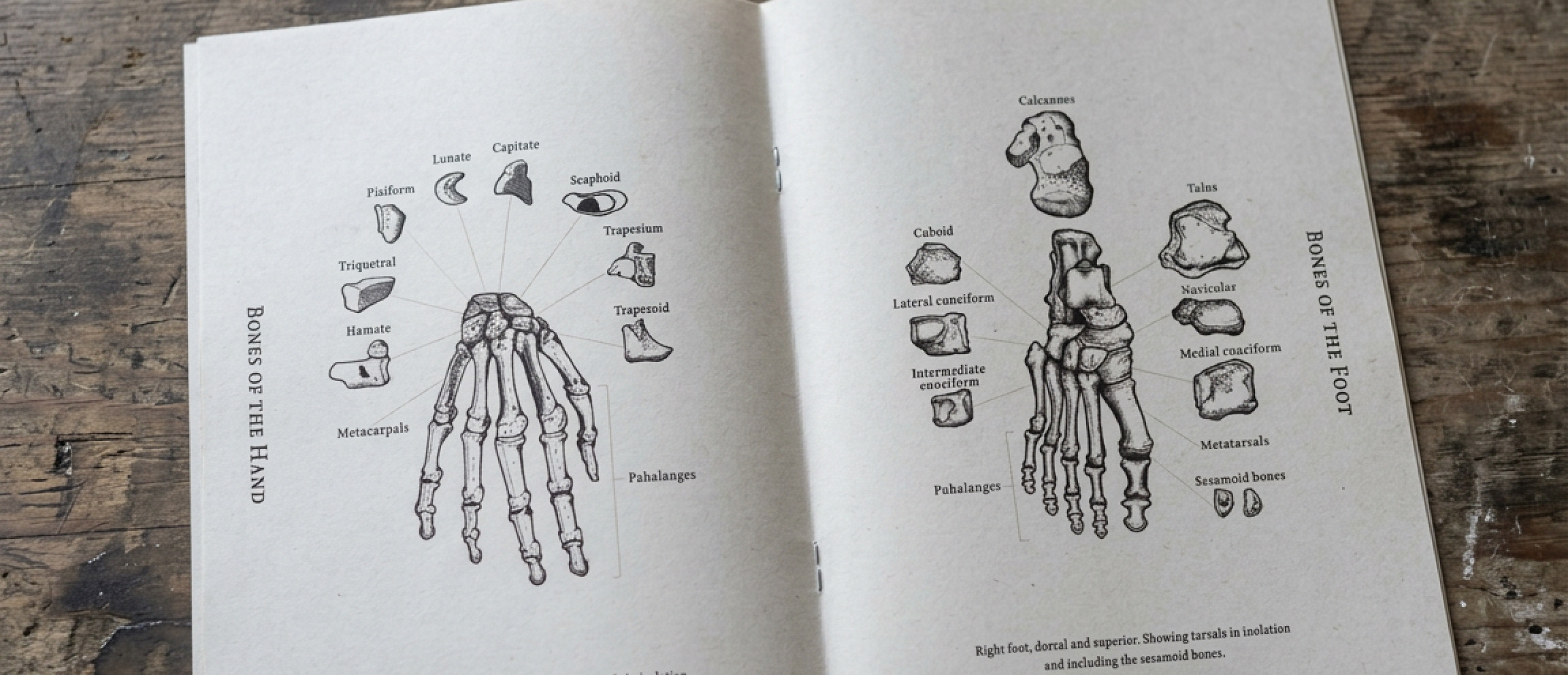
Where a step can be drawn, it is drawn. Francesca Southon’s line work carries the anatomy, the burial positions and the slumping sequences as a visual that reads instantly. Where it cannot, the type does the work, with numbered markers and bold lead-ins so a step can be found mid-task.
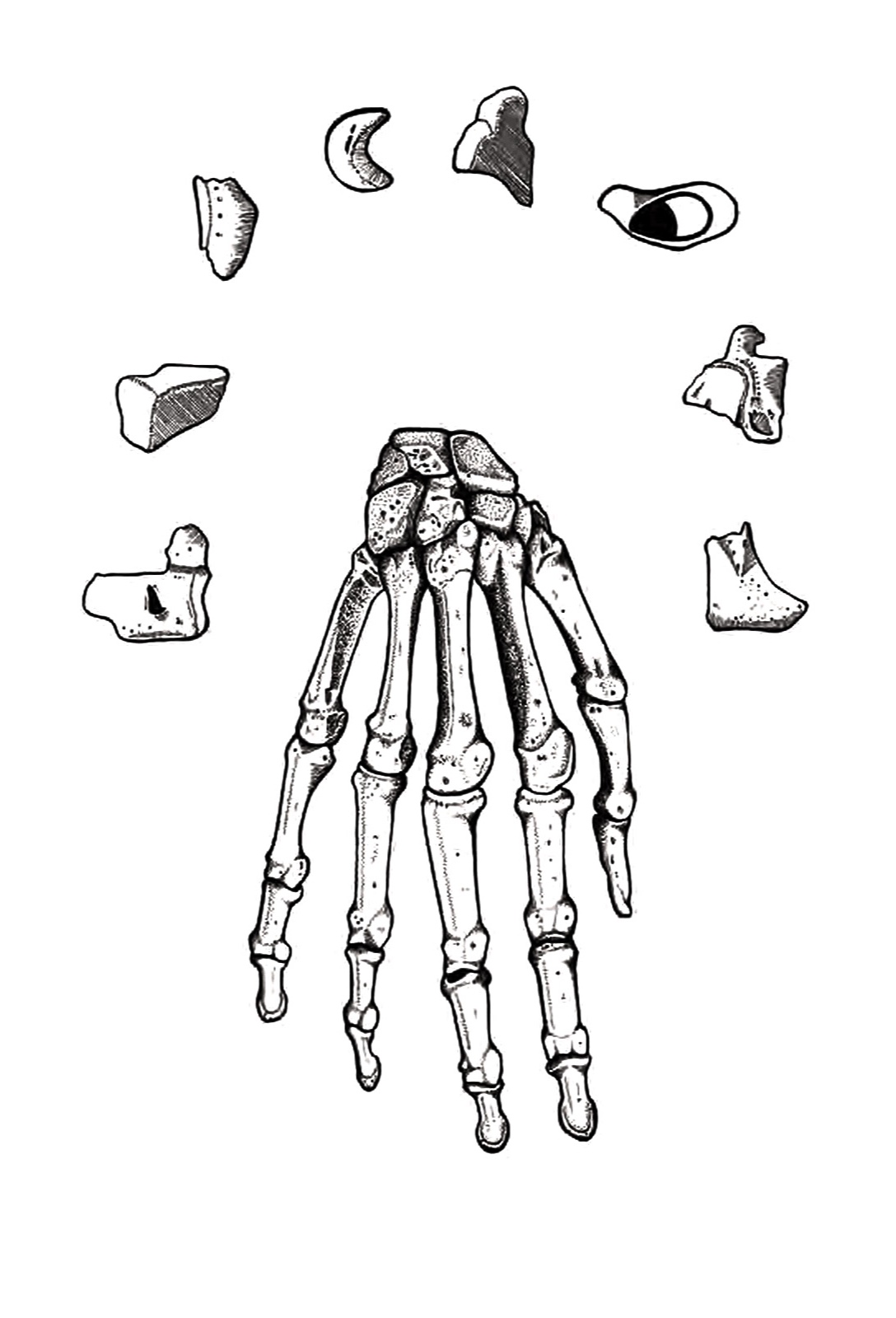
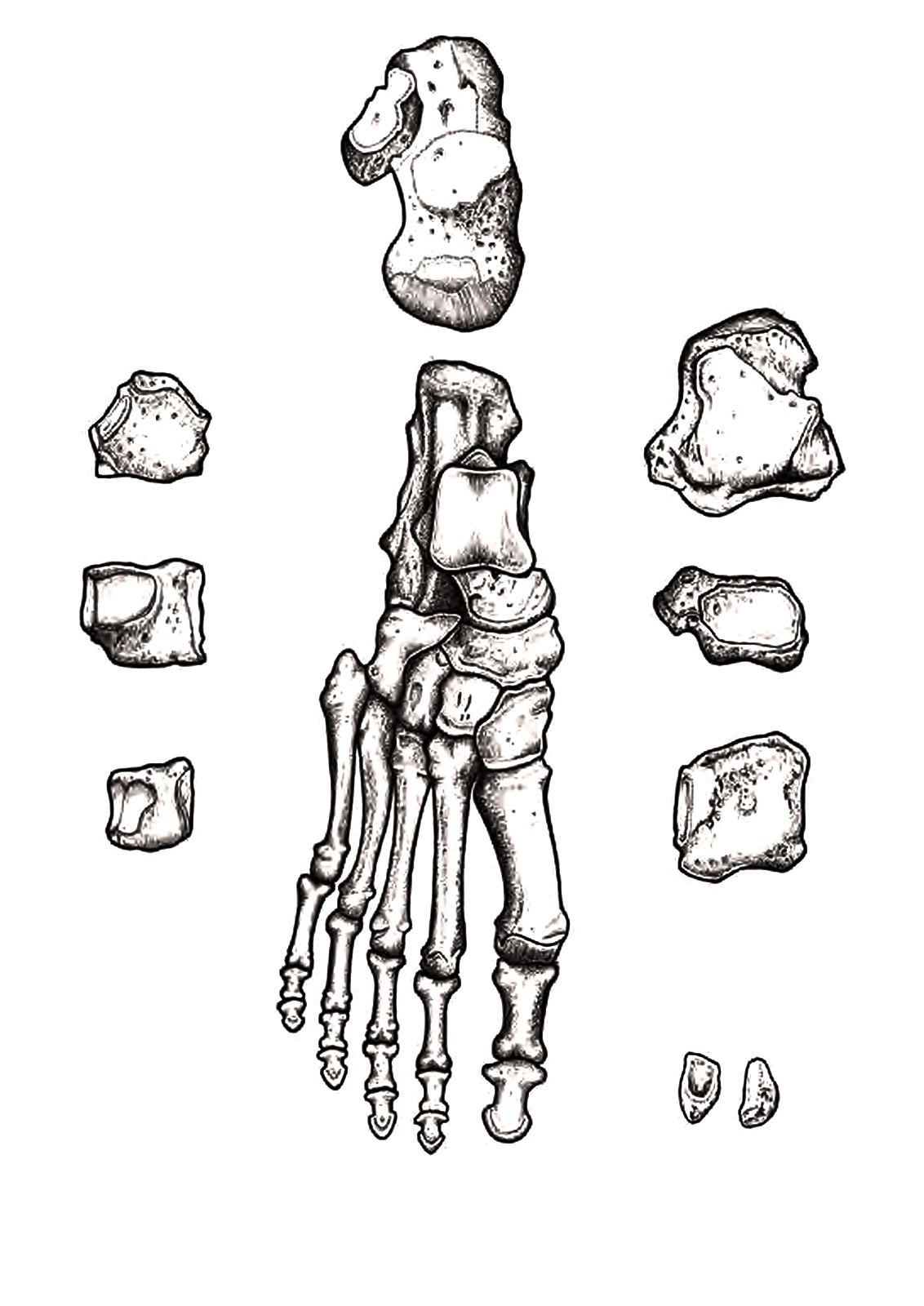
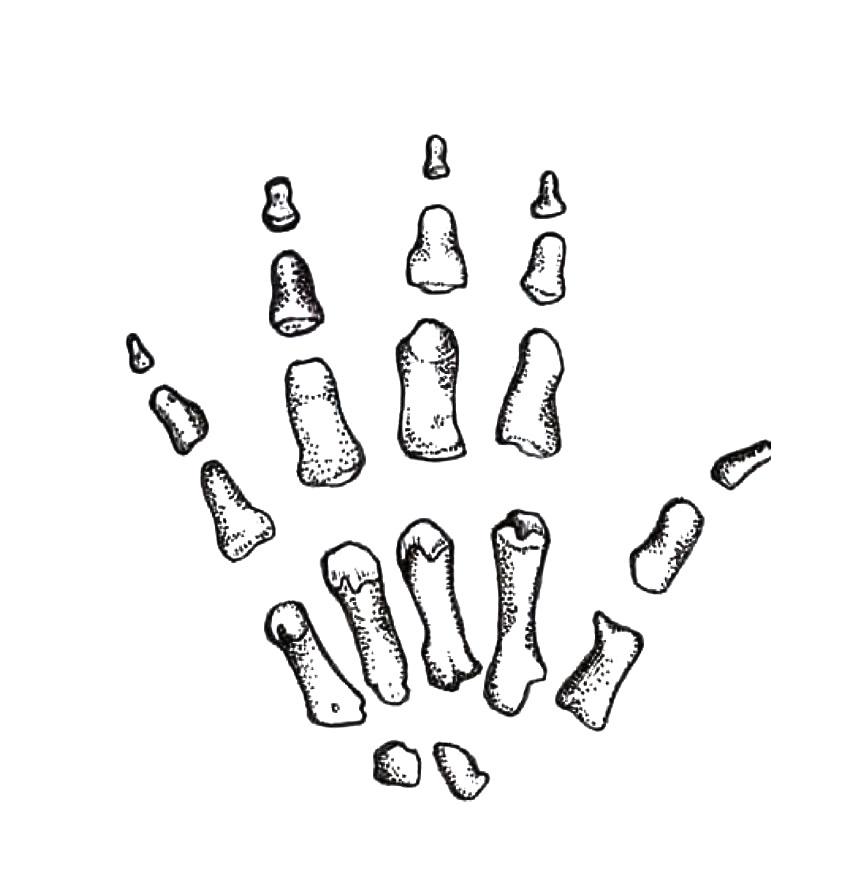
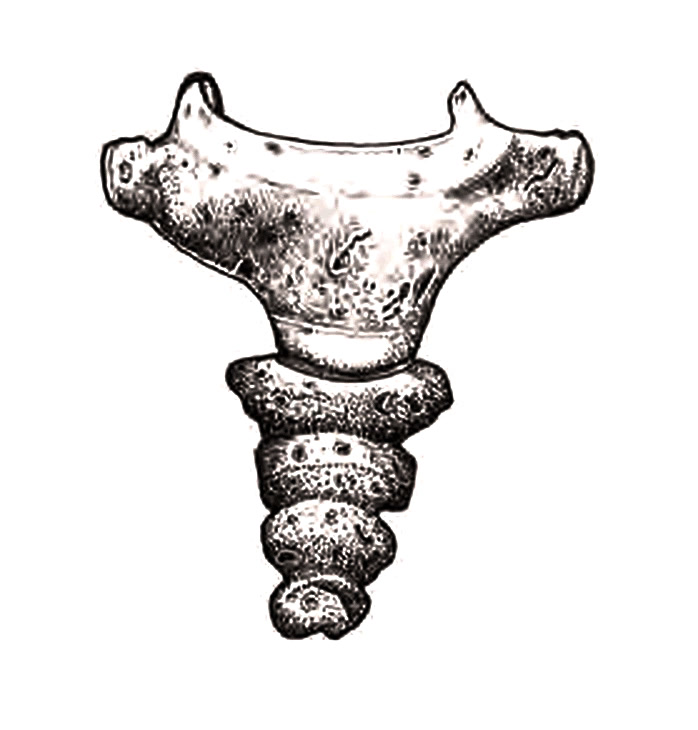
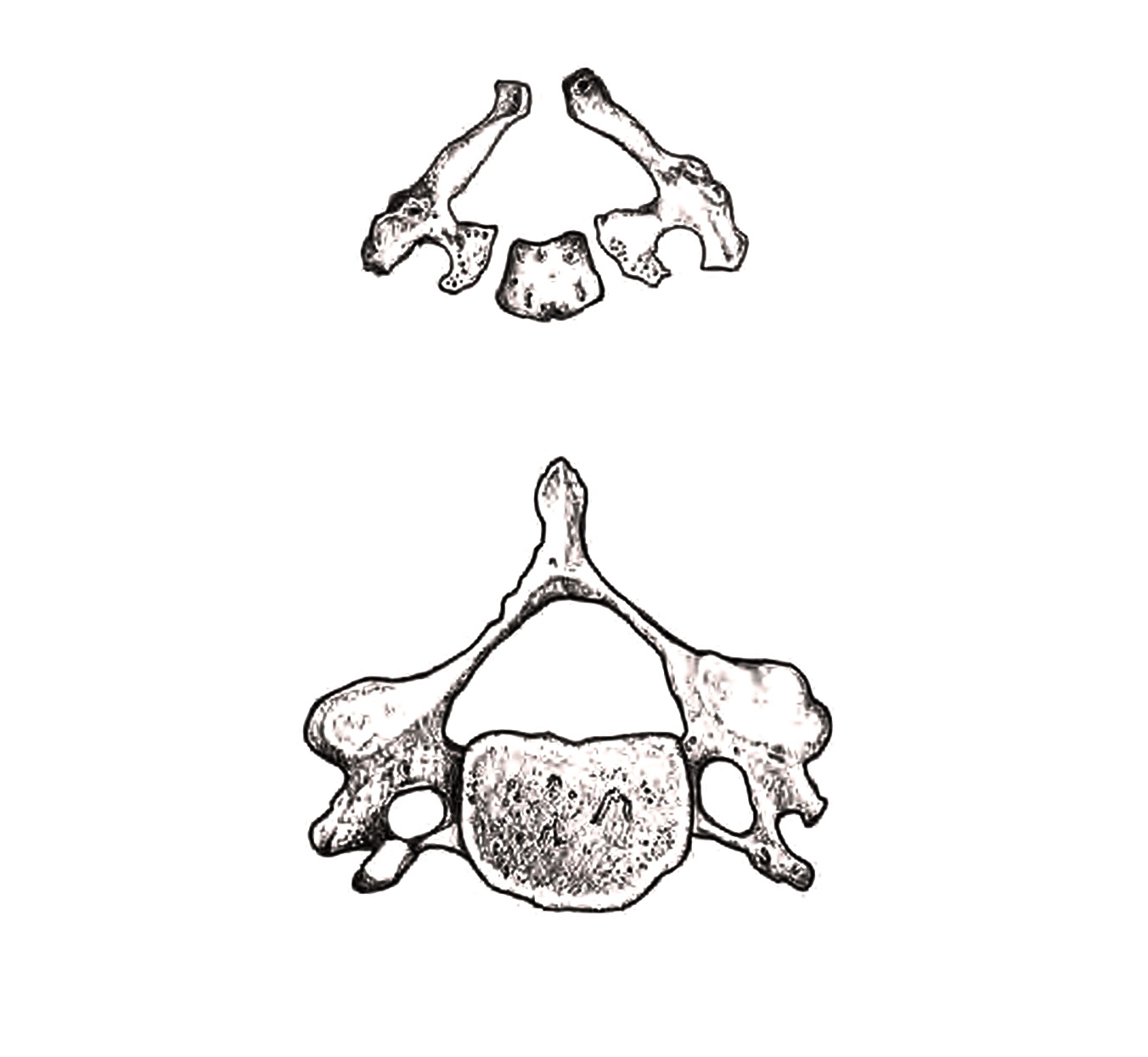
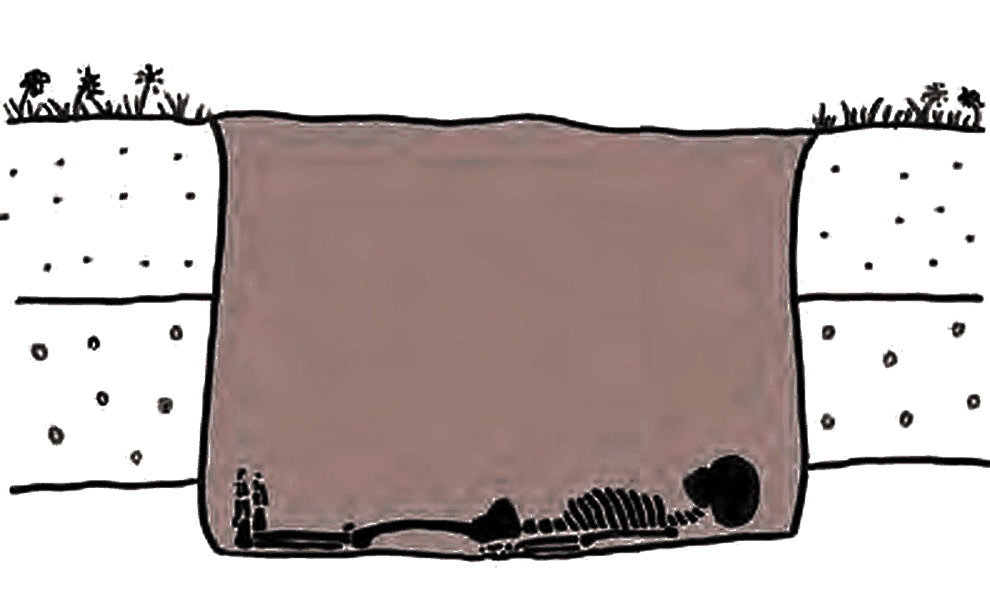
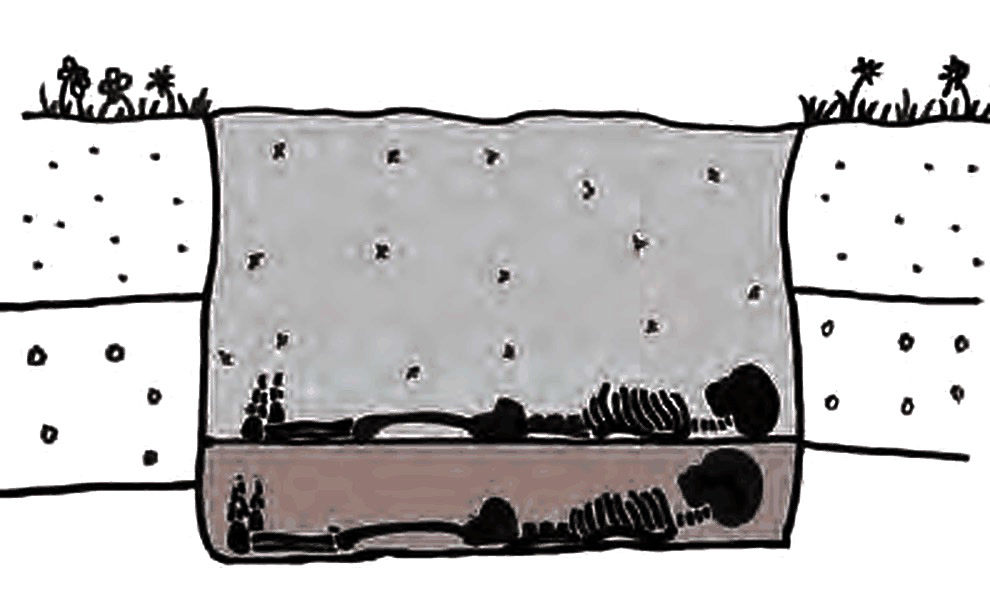
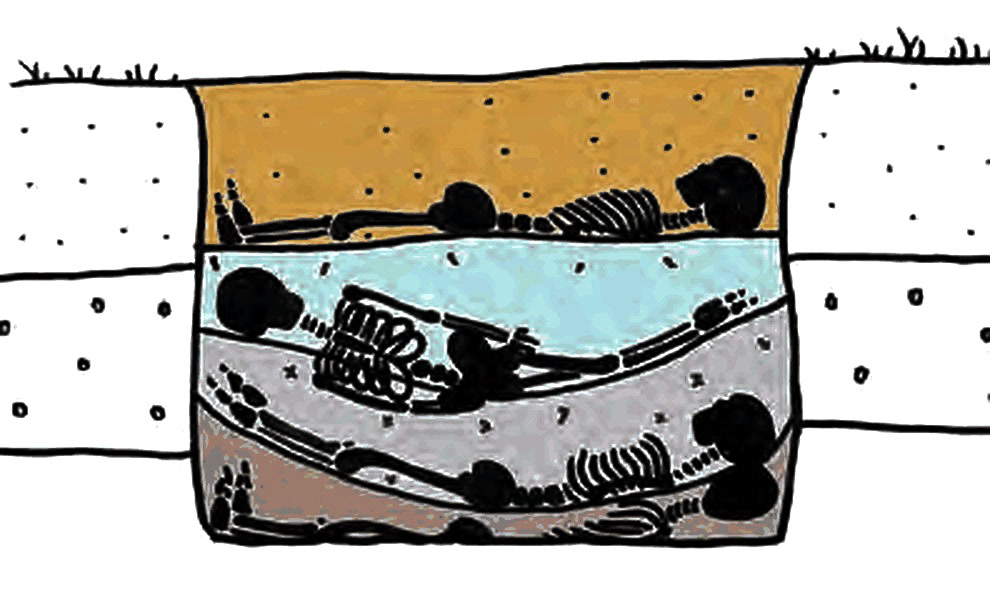
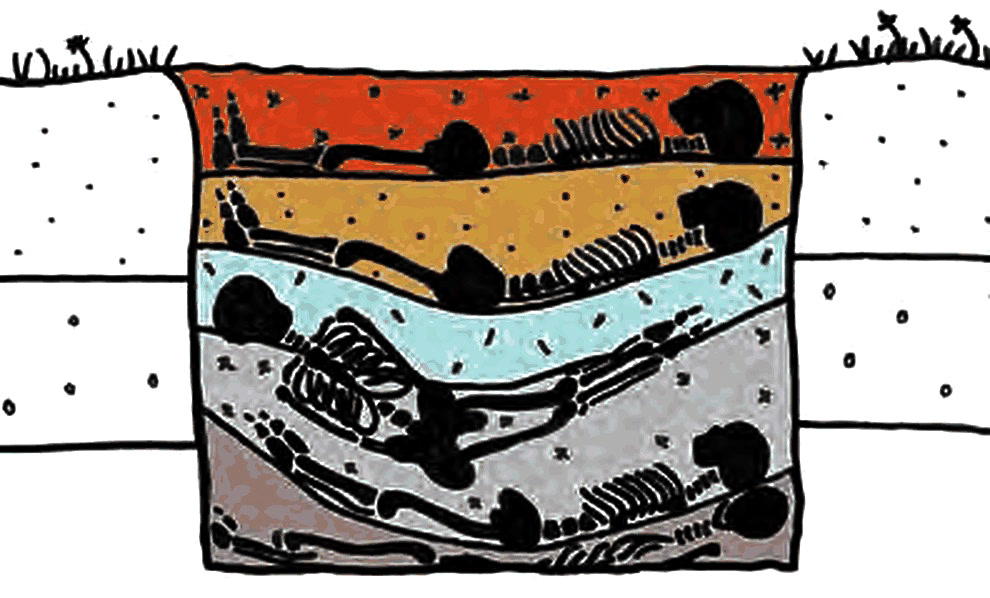
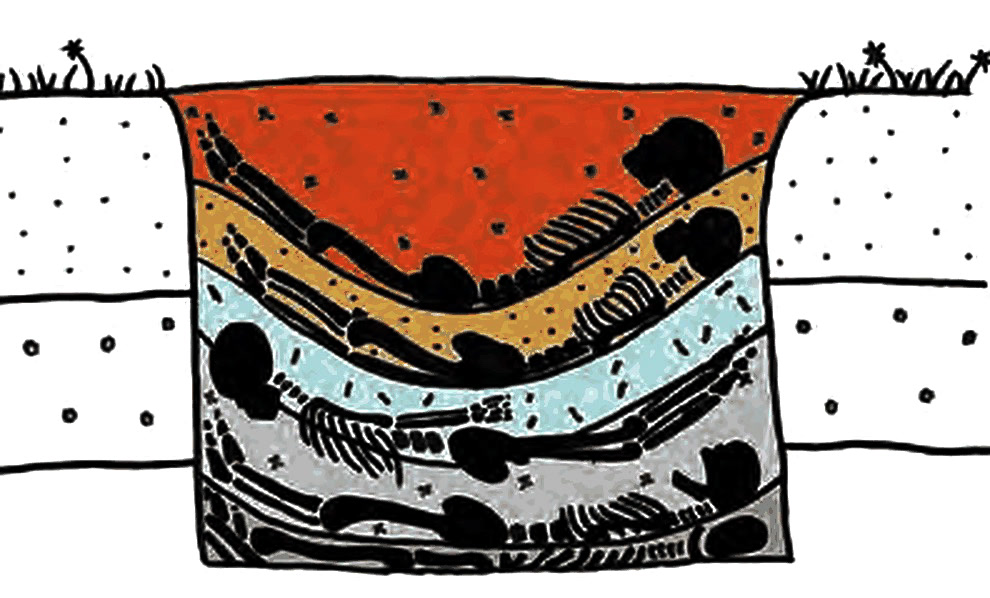
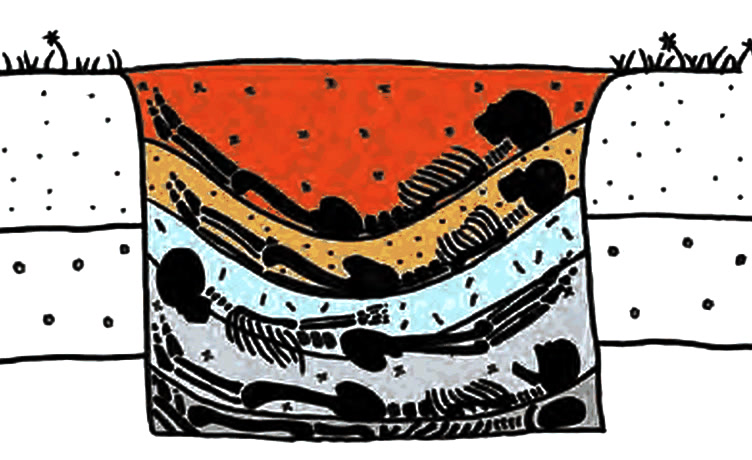
Francesca Southon’s drawings: hand and foot, vertebrae and phalanges in isolation, and a burial stack filling in stages.
Credits
Client: L-P Archaeology · Osteology and excavation: Erna Johannesdottir · Illustration: Francesca Southon · Digital archaeology: Kit Ackland · Images: 3D visualisations built from the original artwork